Gustav V
Promise at DawnGustav V appears in Romain Gary’s memoir as an unassuming but decisive presence at the Parc Impérial tennis club. When Gary’s mother publicly challenges the club over her son’s exclusion, the king turns a scene poised to deepen the boy’s shame into an act of recognition: after watching him struggle on court, he pays the subscription and praises his courage and determination. Gary remembers the encounter not as a royal spectacle, but as a moment of unexpected kindness that permanently bound him to Sweden.
Identity and Appearance
Gustav V is presented as an elderly king and a frequent visitor to the French Riviera and its tennis courts. His familiar public image is attached to a straw boater tilted over one ear, a hat that appeared regularly on the front page of local newspapers. At the club, he sits on the lawn beneath a white parasol, taking tea in white flannel trousers and a blue-and-black blazer. These details make him recognizable to the people around him, yet his setting is deliberately ordinary: he is seated among the club’s visitors, close enough to become involved in a dispute unfolding on the grounds.
His manner is initially quiet and composed. When a club official warns Gary’s mother that her shouting risks causing a scandal because the king is nearby, Gustav V does not respond with visible alarm or indignation. He watches her approach, listens to her appeal, and addresses the matter through the practical test of a tennis lesson. The account also acknowledges that he was reputed not to be an easy man to get along with, making the courtesy he shows in this episode notable without suggesting that the memoir establishes his character beyond it.
The Appeal at the Tennis Club
The encounter begins when Gary’s mother objects to the club’s refusal to admit her son to its courts. She argues that he has an extraordinary gift for lawn tennis and that the family cannot pay the subscription because its fortune has been seized by the Bolsheviks. She presents her case directly to Gustav V, asking for his help and protection, while pointing out the club’s president and secretary as the people barring the boy. Gary, who has played tennis only three or four times, is acutely embarrassed by her confident public claim about his ability.
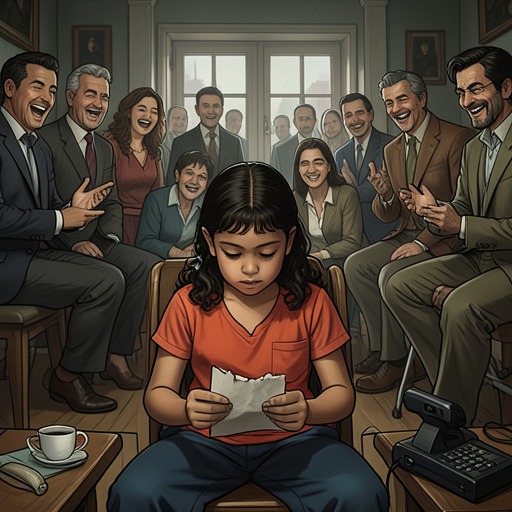
Rather than simply accept her description of her son, Gustav V asks his coach to hit a few balls with him and see how he performs. That request makes the king’s response consequential: Gary must step onto the court before the watching audience and risk proving his inexperience in public. His mother’s confidence, however, gives him a reason not to retreat. He jumps, dives, runs, falls, and scrambles back up, but manages to touch the ball only once, and then only with the wooden part of his racquet. Gustav V watches from beneath his distinctive hat, apparently coldly and without interrupting the trial.
The coach eventually ends the session, and Gary returns to the lawn having failed to demonstrate the talent his mother had proclaimed. She does not treat him as disgraced. She helps him put on his pullover and wipes his face and neck with her handkerchief. Her composed response holds the scene at the brink of a renewed confrontation: the audience has witnessed both the boy’s failure and his mother’s refusal to be ashamed of him.
The King’s Decision
Gustav V resolves the immediate dispute by saying that the club officials should agree that they have witnessed something admirable. He then tells the secretary, Monsieur Garibaldi, that he will pay Gary’s subscription, specifying courage and determination as the qualities the boy has shown. His judgment does not pretend that Gary played well. Instead, it changes what the failed performance means: the boy’s willingness to enter the court and persist becomes more important than his lack of skill.
The intervention also prevents the scene from reaching the public explosion Gary fears. His mother had already challenged the officials in front of the audience and was watching their reaction after her son came back from the court. The king’s courteous verdict supplies a form of vindication without requiring her to launch another attack. The subscription is practical help, but the account gives equal weight to the terms on which it is offered: Gary is acknowledged for conduct under pressure, not for the extraordinary tennis ability his mother had claimed.
Relationship to Gary and Narrative Significance
Gustav V’s importance in the episode lies in the contrast between the boy’s exposure and the adult’s recognition. Gary is placed before spectators whose amused attention intensifies his shame; the king, though watching the same awkward performance, reads it differently. By naming courage and determination, he gives the child’s endurance a public meaning that the laughter and the failed test had threatened to deny. The king does not erase the humiliation, but his response keeps it from being the only verdict the scene leaves behind.
The ending is deliberately modest. Gustav V pays the subscription, and Gary later says that he has loved Sweden ever since. Yet the episode does not become the beginning of a lasting tennis-club life: Gary never again sets foot in the Parc Impérial. The lasting connection is instead emotional and narrative. In the memoir, a king remembered for his public hat becomes the person who, in a moment of exposure, recognizes a frightened boy’s effort and offers him concrete assistance. That brief act gives the scene a gentler conclusion than Gary expected, while leaving intact the embarrassment that made it unforgettable.